I spent my first three years in a 38-square-metre flat walking right past a drafty, unloved corner next to my bedroom window. It was the designated graveyard for cardboard boxes waiting to be broken down and an acoustic guitar I swore I was going to practice every Tuesday. It was pure visual guilt. But when you inhabit compact footprints, letting even 0.8 square metres sit idle is an architectural crime.
Creating an immersive reading nook isn’t merely about shoving an armchair into an angle. It is an intentional orchestration of geometry, sensory insulation, and human scale. When nestled correctly, a corner offers natural structural embrace—a concept evolutionary psychologists call "refuge." You sit with two solid planes protecting your perimeter, leaving your line of sight open to the room while feeling cocooned.
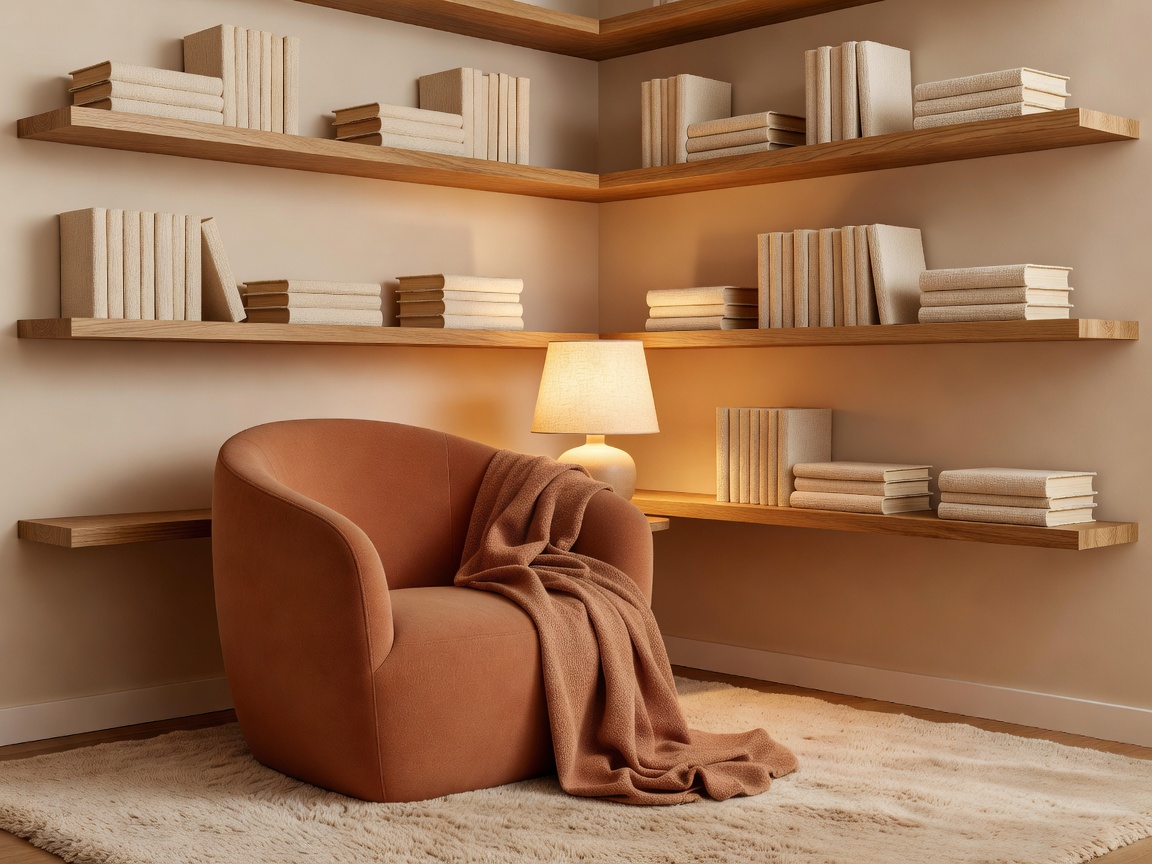
The Dimensional Sweet Spot: Chair Geometry
The most frequent failure mode in corner styling is scale mismatch. Standard wingback armchairs demand at least 110cm of depth from back to footrest, with sprawling arm profiles that swallow small spaces whole. For an efficient nook, you must prioritize low-profile, tub-shaped, or Danish mid-century inspired profiles with tapered legs that let flooring remain visible underneath.
| Profile Style | Footprint Depth | Clearance Needed | Best For |
|---|---|---|---|
| Tub / Barrel Chair | 72–78 cm | 15 cm from wall apex | Ultra-compact nooks under 1.2m wide |
| Splayed-Leg Slipper Chair | 68–74 cm | 10 cm from wall apex | Minimalist setups; high visual flow |
| Low-Slung Swivel Rocker | 80–86 cm | 25 cm from wall apex | Multi-use nooks that face living zones |
Vertical Wall Storage vs. Floating Book Ledges
Do not sacrifice valuable floor area to a freestanding bookcase. Instead, run twin vertical stacks of floating corner ledges. Staggering 25cm deep solid oak or powder-coated steel brackets up the corner apex draws the eye upward, giving low-ceilinged rooms an instant visual lift.
Pros & Cons of Dedicated Corner Nooks
Advantages
- Reclaims under-utilized floor space instantly.
- Establishes an emotional quiet zone separate from television or screens.
- Improves room acoustic damping via upholstered furniture and books.
Trade-offs
- Requires precise directional task lighting to avoid heavy shadows.
- Can block natural radiator heat circulation if placed improperly.
- May impede vacuum cleaner access if cords aren’t neatly managed.
Lighting the Corner: Avoiding Shadow Traps
Because corners naturally receive less secondary daylight bouncing off adjacent surfaces, poor illumination will turn your nook into a gloomy cave. Avoid single ceiling lamps, which throw harsh shadows over your shoulder while you read.
The golden solution is an articulated wall-mounted swing-arm sconce positioned 115cm off the finished floor, paired with an amber-tinted 2700K LED filament bulb (roughly 450 lumens). The warmth invites relaxation without straining your eyes during a late-night chapter binge. Finish the zone with a rounded, chunky wool footstool that can double as extra seating when friends visit.